River Kayak vs Tubing in Bali: Which one is better?
01 October 2026
Are you unsure about which water activities to choose while on holiday in Bali? Most people usually choose beaches—but there’s actually so much more to explore beyond the coastline. Bali is also home to exciting river-based activities like tubing and kayaking. At first glance, they might seem quite similar since both take you along the river. But when it comes down to choosing just one, it’s easy to feel a little unsure about which experience is the right fit for you.
You’re faced with a choice between a laid-back experience where you can simply enjoy the scenery, or a more thrilling adventure that gets your adrenaline going. This is where the difference really starts to stand out, as each activity offers a unique experience depending on your travel style and the kind of sensation you’re looking for.
So what are the key differences between tubing and kayaking? Instead of choosing at random and possibly regretting it later, let’s find out the differences so you can decide which one truly fits your holiday style!
What is river tubing and kayaking?
Before making your choice, it’s helpful to understand what each activity actually means. Tubing is a fun and relaxing way to float along the river using a specially designed rubber tube, allowing you to enjoy the surroundings with minimal effort. Meanwhile, when it comes to kayaking, it refers to a type of watersport that requires you to paddle using your own strength to move through the river and reach the finish point, making it a more active and engaging experience.
Both activities have similarities in that private trip, as each boat is typically used individually or in pairs. It gives you space to fully enjoy the journey at your own pace. However, despite this similarity, the experience you get from each activity is quite different.
What are the key differences between tubing and kayaking?
The difference between tubing and kayaking is not only about the equipment used, but also extends to several aspects, such as difficulty level, control of movement, overall experience, and even the purpose of the activity itself. To understand these differences more clearly, several key aspects can be used as a reference when comparing the two activities, as follows:
Gear & Guide
Some of the equipment used in tubing and kayaking is quite similar, such as life jackets and helmets. These are essential safety gears that must be worn throughout the activity. Usually, the guide will help to pick and provide the right equipment to ensure it fits each participant properly and comfortably.
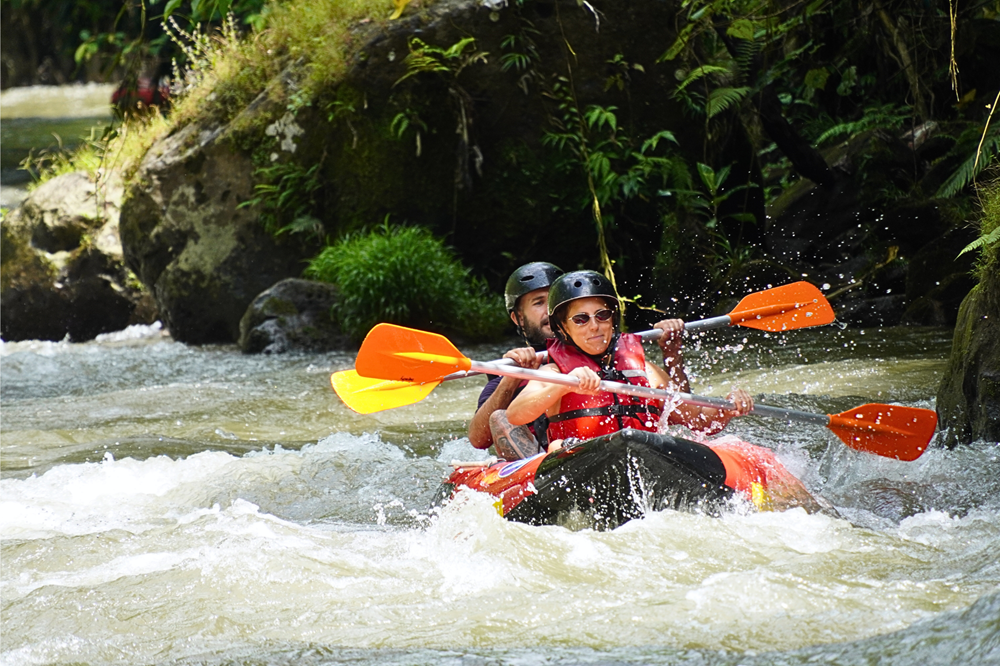
Although both use an inflatable boat, they are designed in different ways. A kayak boat has a slim, elongated shape with tapered ends, which helps maintain direction and allows the boat to move faster and more steadily along the river. This type of boat is typically used as a tandem kayak, accommodating one guide and one participant for a more controlled and guided experience.
A tubing boat is usually round, although some designs come in oval shape. Each boat typically carries one or two people to help maintain stability while moving through the river’s rapids. On the edge of the boat, there is a safety rope that participants can hold onto, helping to prevent them from falling out when passing through the currents or when the boat gets close to rocks or the riverbank.
One of the most obvious differences is that kayaking uses kayak paddles, while tubing does not require any movement equipment. Kayak paddles are typically double-bladed, allowing you to paddle efficiently on both sides without constantly switching hands, which helps maintain balance and reduces strain on the shoulders. As the main source of movement, the paddle also plays an important role in controlling direction and helping you navigate around obstacles such as rocks and strong river rapids.
The role of a guide goes beyond simply giving directions and leading the route. They play a crucial part in ensuring safety and enhancing the overall experience for participants. Although it may seem straightforward, river guides are required to have proper skills and certifications, such as river guiding certification, basic safety training, first aid, CPR, and even orthopedic response training in case of fractures or serious injuries.
Tech and Control
Tubing Activity
This activity is so passive, as participants simply follow the river’s current from the starting point to the finish point. Since it only uses a tube boat without any additional equipment, tubing highly depends on the river’s flow and water level. No special techniques are required—participants need to hold onto the safety rope to avoid falling out of the boat.
If you get stuck between rocks or along the riverbank, you can use your feet to push or kick against the stones, or gently shift your body to help free yourself. In other words, tubing mainly relies on your own body movements to navigate and get out of tight spots between river rocks. The duration of a tubing activity also depends on the speed of the river current. When the water level is low and the flow is very slow, the journey may take longer. This often happens during the dry season, when reduced river discharge causes the water to move more calmly and slowly than usual.
Kayaking Activity
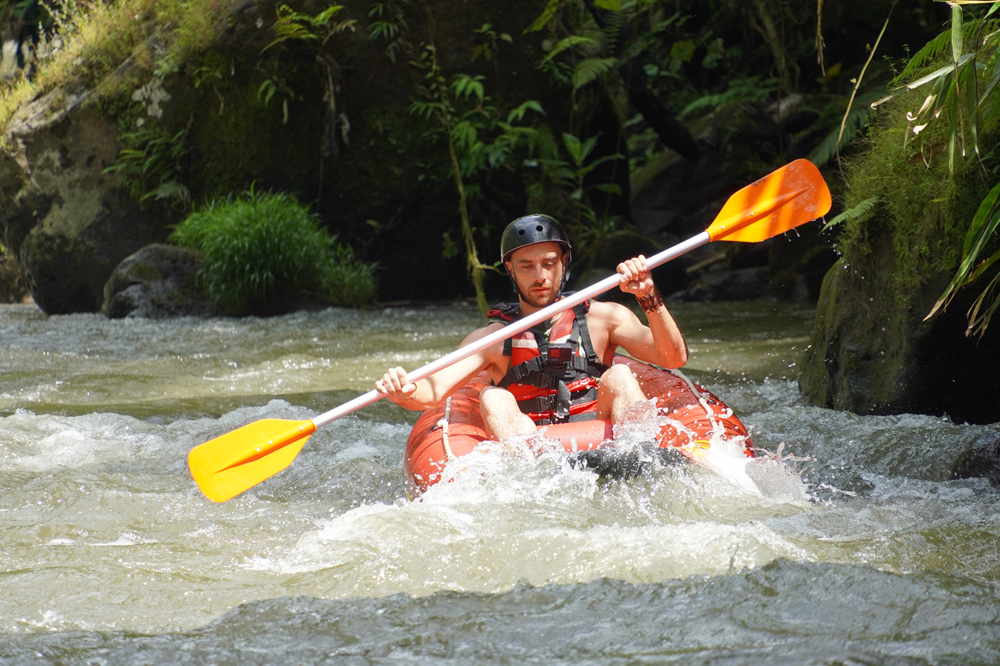
Kayaking is more active, as participants are required to paddle in order to steer the boat along the river path. It uses paddles, and participants are expected to understand the basic techniques properly to avoid injury. Before the activity begins, the guide will explain how to hold the paddle, the correct paddling technique, and the safety signals or instructions that must be followed while on the river.
The correct way to use a paddle is by holding the middle shaft of the paddle horizontally. When the right blade enters the water, the opposite side will naturally rise above the surface. To move forward, the paddle is pulled through the water from front to back, then repeated on the other side using the same technique. At first glance, it may look simple, but it actually requires a fair amount of strength and endurance to properly propel the kayak.
By using a paddle, participants are able to control the direction they want to go and even adjust the speed of the boat to create a more thrilling, adrenaline-filled experience. Even during the dry season, the excitement remains as control is fully in the hands of the participant. When reaching calmer sections of the river, participants can pause paddling and simply let the current carry the boat while enjoying the scenery along both sides of the river.
Grade of Rapids and River’s Location
The grade of rapids is one of the key factors in determining what kind of activity is suitable to be done on a river. This classification system follows international standards and is based on the level of difficulty, danger, and technical navigation required in a river. The scale ranges from Class I to Class VI, where higher grades indicate more powerful, challenging, and potentially dangerous rapids.
River grades in Bali generally range from Class II to IV, which are mostly used for water-based tourism activities. Class I–II rivers are known for their calm water, slow currents, small waves, and minimal obstacles. This level is ideal for tubing, as the gentle flow and very mild rapids (or sometimes none at all) make it perfect for a relaxed river journey. Some well-known rivers with Class I–II conditions include the Pakerisan River and the Jatiluwih River.
Class II–III rivers usually feature stronger currents, wavy rapids, and several large rocks that act as natural obstacles, requiring basic paddling techniques to navigate. This grade is still considered safe and is suitable for more adventurous activities, while remaining accessible for experiences like rafting and kayaking. Well-known rivers with this classification include the Ayung River, Gelar River, and Telaga Waja River.
Which one is right for you?
Not sure whether to choose tubing or kayaking? It all depends on the kind of vibe you’re looking for. If you simply want to relax and enjoy the scenery, tubing is the perfect option. Floating along the river with minimal effort makes it ideal for anyone who wants something easy, fun, and without special skill.
On the other hand, kayaking is better suited for those who want a more active experience. It takes some effort to paddle through the river and navigate the rapids, making the whole journey feel more exciting and adventurous. It’s a great choice if you enjoy a bit of challenge combined with a fun physical activity.
At the end, it depends on the experience you want—active or passive. Want to chill and just go with the flow? Choose tubing. Feeling a bit more adventurous? Grab a kayak and start paddling.
If you’re interested in trying river kayaking, it’s important to choose a trusted and reliable operator to ensure a safe and enjoyable experience. Surya Bintang Adventures offers kayaking activities that prioritize safety, comfort, and customer satisfaction in every trip. All equipment, guide training, and service standards are carefully maintained to ensure consistent quality throughout the experience.
Want to paddle your way through an unforgettable adventure? Join kayaking trips for fun, challenge, and stunning scenery. Save your seat now!